
GRASSPEA ATLAS
MAPPING THE PEOPLE, PLACES & SCIENCE OF GRASSPEA
GRASSPEA ATLAS | BLOG 01 | THE BEGINNING OF THE JOURNEY
1. Why Does Grasspea Deserve Its Own Atlas?
The Scattered Nature of Grasspea Research Across Countries, Disciplines and Generations
Grasspea (Lathyrus sativus) has a long story. From South Asia to the Mediterranean and from Ethiopia to Europe, it has been cultivated for thousands of years, connecting very different agricultural and food traditions. Today, it remains a versatile legume used for food, feed, and forage, valued for nitrogen fixation and its ability to tolerate drought and waterlogging.
Researchers have studied grasspea for decades, addressing questions related to genetic diversity, breeding, nutrition, stress tolerance, agronomic performance and adaptation. Yet Grasspea Research is Scattered Across Many Places.
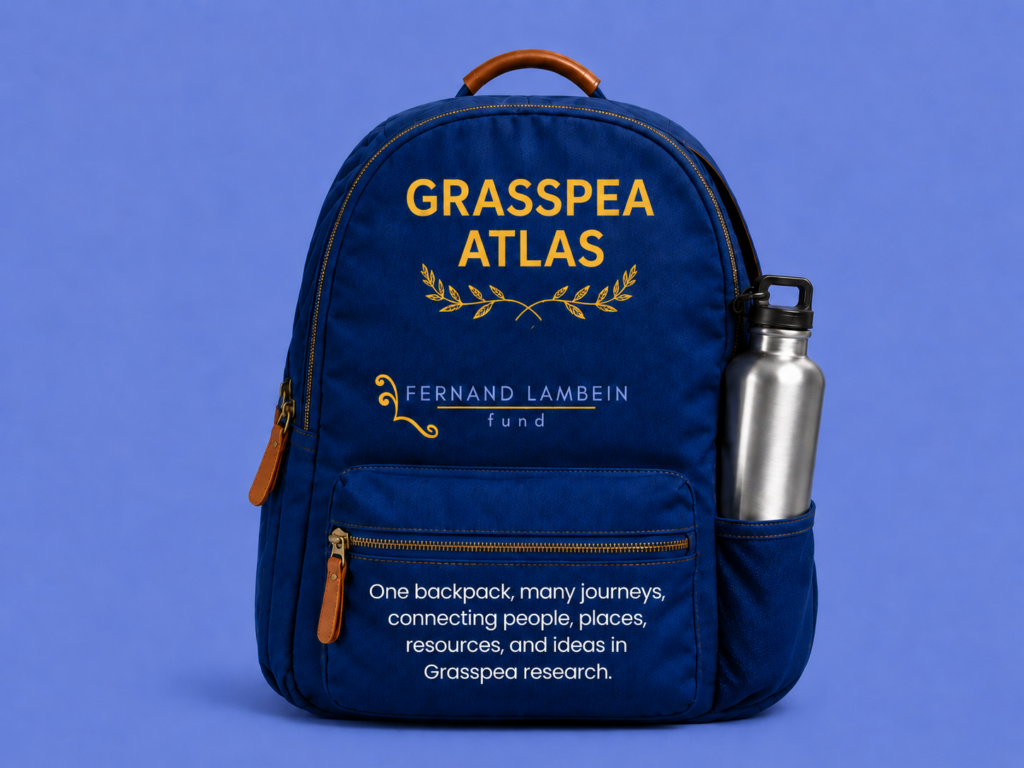
One Backpack, Many Journeys: Mapping the landscape of grasspea research.
Information about researchers, institutions, germplasm, publications, datasets, breeding programs and current projects is spread across countries, disciplines and generations of research. The knowledge is there. The challenge is connecting these pieces and identifying the people, institutions and resources behind the research.
What is missing is a connected and accessible picture of where the work is happening, who is doing it, what resources are available, and how the different pieces fit together. The Grasspea Atlas brings these pieces together through a country- and region-based exploration of grasspea science.
IT ASKS:
Where has grasspea research taken place? Who has contributed to it? What has been discovered? What resources are available? What questions are being explored now? And where can connections be made?
2. Research Framework of the Grasspea Atlas
A Consistent Lens for Every Research Journey
The Atlas will use a consistent framework to explore grasspea research across countries and regions.
These questions stay the same across countries. The answers change.
Each research journey will explore:
| Research History | How did grasspea science develop here? |
| Institutions and researchers | Who has contributed to grasspea research, and who is working on it today? |
| Research priorities | What questions and challenges are being studied? |
| Germplasm and genetic resources | What materials and resources are available? |
| Key publications and discoveries | What has the research contributed? |
| Datasets and research tools | What resources are available for further research? |
| Current programs and projects | What is happening now? |
| Connections and opportunities | Where can research communities connect and collaborate? |
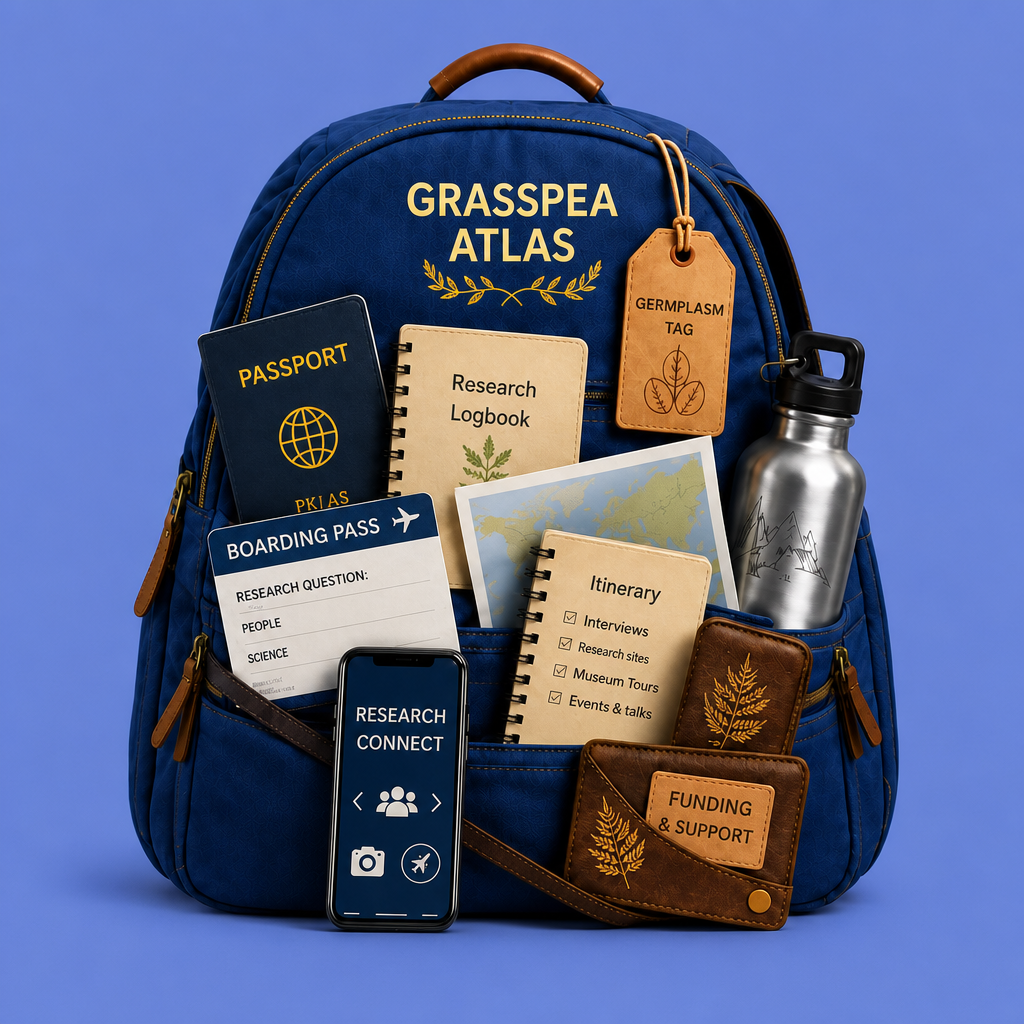
This common framework makes it possible to explore very different research landscapes while connecting the different research journeys within one Atlas.
The aim is not to rank countries or research programs. It is to document what exists, trace how it developed, and connect different parts of the grasspea research community. The Atlas will begin with key grasspea research landscapes and expand progressively from there.
3. The Research Backpack
One Backpack. Nine Objects. Many Research Journeys.
To bring this framework to life, the Grasspea Atlas travels with a Research Backpack. The same backpack. The same nine objects. Different research journeys. Each object represents a specific research question that helps us explore a grasspea research landscape. The objects stay the same throughout the Atlas. What changes is what we discover inside them as the Atlas moves from one country or region to another.
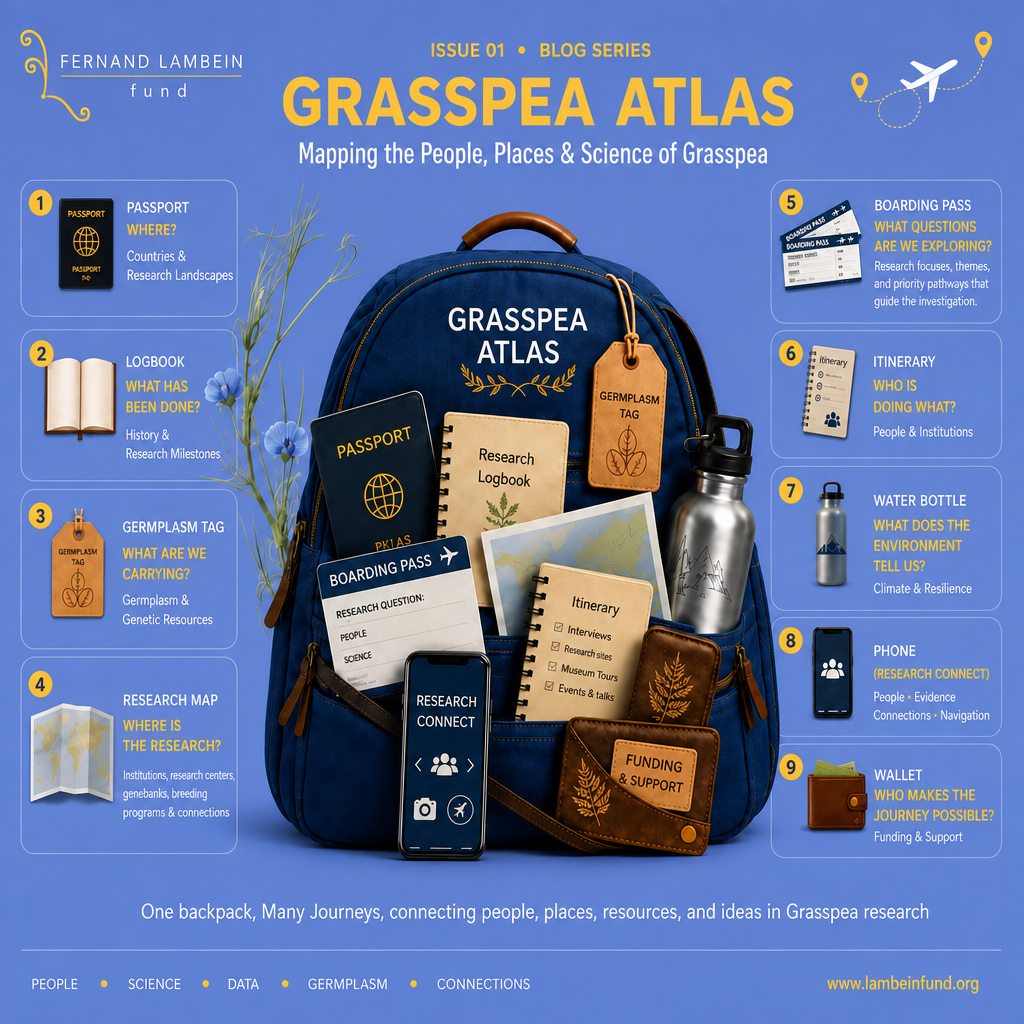
01 | PASSPORT | Where are we going? The Passport identifies the countries and regions connected to grasspea research. |
02 | Logbook | What has happened there? Research history, milestones, discoveries, publications and changing research questions. |
03 | Germplasm Tag | What resources are we carrying? Accessions, collections, genebanks, genetic diversity and breeding materials. |
04 | Research Map | Where is the research? Universities, research centers, genebanks, breeding programs and other institutions. |
05 | Boarding Pass | What question are we exploring? The main scientific question or theme guiding each research journey. |
06 | Itinerary | Who is doing what? Researchers, institutions, research focus areas and current projects. |
07 | Water Bottle | What does the environment tell us? Climate and environmental conditions relevant to the research. |
08 | Phone | How do we connect and document? Communication, field evidence, research in action and navigation across the wider research landscape. |
09 | Wallet | Who makes the journey possible? Funding agencies, foundations, institutions, partnerships and other forms of support. |
4. The Atlas Begins
The backpack is packed. The framework is ready, and the first research journey is about to begin. From here, the Grasspea Atlas will travel across research landscapes, uncovering the people, resources and discoveries that have shaped grasspea science. Each journey will add another piece to the larger picture. But every journey needs a first destination.